Aspen Global Incorporated manages more than 3 000 SKUs from 85 manufacturing sites and 25 active pharmaceutical ingredient manufacturers. Over the past 15 years it has distributed approximately 1,1 billion packs of medicine to more than 100 markets worldwide.
Since 2020 several air, sea and road freight environmentally conscious initiatives have been adopted which have contributed towards a significant reduction in CO2 emissions, further complementing the Group’s commitment to environmental sustainability.
Aspen Global Incorporated was established in Mauritius in 2008 to implement the Group’s internationalisation strategy. This business unit’s mandate includes managing and maintaining intellectual property rights, regulatory standards and the commercialisation of the Group’s Commercial Pharmaceuticals portfolio of specialist, branded products.
Distribution of the vast range of products is no mean feat and this is achieved through the expertise of the supply chain team who efficiently manages a complex global air, sea and road freight distribution network with the support of a fine-tuned commercial, logistics and administrative infrastructure.
In line with the Group Environmental Policy, Aspen Global adopted multiple strategic sustainability initiatives in 2020 to foster greener distribution practices for the 55 000 pallets of medicines which are freighted annually either by air or sea.
In FY2020 some 74% of cross ocean shipments were air freighted which is one of the highest CO2 emission transport mode generators in the world. As such, one of the primary focus areas was to transition air freight to sea freight. Plastic-based thermal blankets are also used for air freight to ensure that the cold chain is preserved, and the quality of our pharmaceutical products is not compromised.
By adopting several environmentally friendly initiatives, including negotiating increased lead times with customers and suppliers without disrupting supply of products to patients, Aspen Global has decreased air shipments over the past five years by 50% which has contributed to a similar CO2 emission reduction. Aligned to reduced air freighting, Aspen Global is also fully transitioning from using thermal blankets to a 100% recyclable Solaris S20 paper-based solution in FY2025 which will replace about 7 000 plastic thermal covers annually.
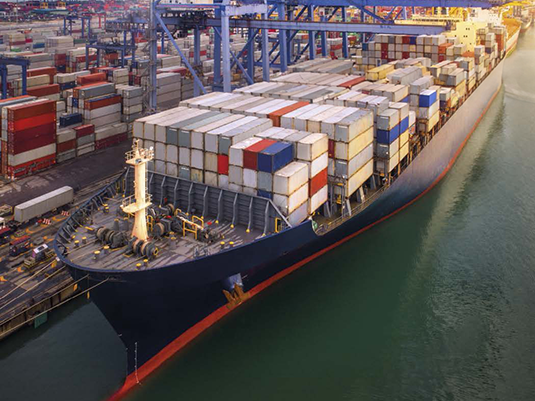
Sea freighting has also been under Aspen Global’s carbon footprint spotlight given its uptake following the successful reduction in air freighting. In FY2020, 26% of orders were dispatched via sea compared to 47% in FY2024. To further reduce CO2 emissions across our oceans, container cubage has been optimised from 66% in FY2020 to 76% in FY2024. This has been achieved by implementing an innovative, recyclable or reusable double stacking Single Pallet Porter® solution that does not compromise the integrity of products, and which can be used for air, sea or road freight.
A further reduction in CO2 emissions is being accounted for road freight across Europe by consolidating Aspen products to fully utilise Full Truck Load capacities. Where this is not possible Aspen is making use of Less than Truck Load services from our logistics partner.
By implementing innovative supply chain solutions and adopting environmentally conscious practices, Aspen Global has contributed to a substantially reduced carbon footprint within five years which strongly complements the Group’s commitment to environmental sustainability.
